Discovering Hidden Gems: Irish Pub NYC Edition

New York has never lacked for bars that claim an old-country soul. Walk a few blocks in Midtown, the Financial District, Woodside, or the West Village and you will see enough shamrocks, Guinness signs, and dark wood facades to make the search for a great Irish pub NYC experience feel almost too easy. The harder truth is that not every place wearing the look has the substance. Some pubs are built for tourists moving in packs before a Broadway show. Some are little more than sports bars in a Celtic costume. And then there are the places that earn loyalty the slow way, pint by pint, conversation by conversation, year after year.
Those are the hidden gems worth talking about.
A real Irish pub in New York does not have to be old in any official sense, and it certainly does not need to perform its identity loudly. What matters more is atmosphere with backbone, bartenders who know when to chat and when to leave you alone, a room that feels good at 4 p.m. As well as 11 p.m., and a crowd that includes regulars who are there because they want to be, not because an app told them to stop in. The best ones feel grounded. They know what they are.
What makes a pub feel like a discovery
The phrase "hidden gem" gets abused in city guides. In practice, it usually means one of three things. It may be physically tucked away on a side street. It may be overlooked because a louder, flashier competitor gets the headlines. Or it may reveal itself gradually, which is often the strongest form of discovery. A pub can sit on a busy avenue for decades and still feel hidden if most passersby never understand what is inside.
That distinction matters in New York, where many bars are judged too quickly. Someone walks in on a Friday night, sees three deep at the bar, hears a cover of "Whiskey in the Jar," and decides the place is generic. Visit again on a rainy Tuesday and the whole character changes. Suddenly you notice the quality of the pour, the pace of conversation, the framed county crests fading slightly at the edges, the older couple sharing stew by the window, the electrician still in his work boots talking quietly with the bartender. Good pubs often reveal themselves in layers.
The hidden gem standard is not about secrecy for its own sake. It is about texture. The room should tell you something the minute you enter. Maybe it is the scuffed brass foot rail, the smell of malt and fried onions, the muted horse racing in one corner, or the easy way strangers negotiate space without friction. These details are hard to fake and even harder to sustain if the operation underneath is weak.
The neighborhoods where Irish pubs still carry real weight
Irish pub culture in New York has never been confined to one district. Midtown probably gets the broadest visibility because offices, hotels, Penn Station, and Grand Central create constant foot traffic. That density supports plenty of serviceable pubs, but it can also reward volume over character. The better strategy is to think in neighborhoods, because each area shapes the pub in a different way.
In Woodside and Sunnyside, the Irish pub tradition has long been tied to immigrant life, union trades, family networks, and the routines of everyday work. A pub there may not advertise itself as a destination. It may simply function as part of the neighborhood. You can feel the difference in the timing of the crowd. Early evening brings people who know one another from years back, or at least from enough repeated Thursdays to skip formalities. The music, if there is music, does not have to dominate the room.
The East Village and lower Manhattan offer a different version of the experience. Here the stronger pubs survive by balancing old-world cues with downtown unpredictability. The crowd can be younger, more mixed, less rooted to one block, but a serious pub still holds onto standards. The Guinness line is clean. The kitchen stays dependable. The room never tips too far into themed entertainment.
The West Village and Chelsea often house the kind of pub that matures well if ownership remains steady. These spaces can become second living rooms for people who have aged in place with the city. One mark of a worthwhile stop is the age range. If a pub attracts recent graduates, construction workers, retirees, and off-duty restaurant staff without feeling strained, it is doing something right.
Uptown, especially on the Upper East Side or in pockets of Harlem, the best Irish bars tend to be less discussed but deeply woven into local life. They can feel more practical than romantic, which is often a compliment. A practical pub serves proper drinks, honest food, and enough warmth to make a cold New York night easier.
The signs that separate the real thing from the dressed-up version
A polished facade means very little. A few basic markers tell you more within ten minutes than any review platform can.
- The pour matters. A good pint of Guinness should be patient, settled, and handled by someone who treats it as routine rather than theater.
- The sound level is controlled. You should be able to hear conversation without feeling trapped in library silence.
- The bar staff notices the room. Not in a hovering way, but in the competent, old-school sense that they know who arrived, who needs a refill, and who has had enough.
- The menu stays within itself. A tight lineup of shepherd's pie, stew, fish and chips, brown bread, and a strong burger is more convincing than pages of unrelated crowd-pleasers.
- The regulars are not decorative. If locals return several nights a week and seem relaxed rather than territorial, the pub has earned trust.
Each of these signs reflects operational discipline. The romantic image of the pub can distract from the fact that the best ones are managed with care. Clean tap lines, consistent staffing, fair pricing relative to the area, and a floor plan that lets the room breathe all shape the experience more than the wall art ever will.
Why Midtown disappoints so often, and still surprises
Midtown is where many people begin the search for an Irish pub NYC classic, usually because that is where they happen to be. There is nothing wrong with that. It is simply a district where convenience distorts quality. Bars near transit hubs and theaters live on speed. They need to move bodies, turn checks, and absorb pre-event surges. That environment can flatten personality.
Yet Midtown can still surprise you, especially a few blocks off the most obvious strips. The hidden gems there are usually the pubs that resist becoming all things to all people. They keep the television count modest. They let the dark wood and worn corners do some of the work. They hire bartenders who can handle office crowds at 6 p.m. And solo drinkers at 10 p.m. Without changing the pub's identity.
One practical tip from years of urban bar hunting: if the front windows are full of oversized drink specials, giant novelty props, or gimmicky holiday decor outside of December, keep walking. The best Midtown pubs tend to project confidence rather than chase attention. They trust location to bring people in and quality to bring them back.
Food is not the main event, but it matters more than people admit
People often talk about pubs as if the kitchen were secondary. In mediocre places, that is true. In strong ones, food acts as proof of seriousness. A pub that turns out a rich beef stew, crisp fish with a light batter, or bangers that are actually seasoned and juicy is telling you something about standards across the board.
This does not mean every great Irish pub needs a chef-driven menu. Sometimes the opposite is better. A concise kitchen that knows its lane can support the room beautifully. The trick is proportion. A shepherd's pie should arrive hot through the center, not lava on top and cold underneath. Soda bread should taste like someone cared about the recipe. Colcannon should feel like comfort, not an afterthought scooped from a steam tray.
There is also a particular New York test for pub food: how well it works under pressure. Plenty of kitchens can produce good plates at 3 p.m. On a quiet Sunday. Fewer can maintain quality at 7:30 on a packed Friday when tickets are flying and every stool is filled. Hidden gems are often the places where the food remains steady when the room gets loud.
The social architecture of a great pub
A pub is not just a bar with an accent. It is a social design. The room should help people occupy it in different ways. One person wants to read the paper with a pint. Another wants to meet three friends after work. A couple wants dinner. A cluster near the television wants to catch the match. A proper pub accommodates all of them without turning the experience into chaos.
That balance usually comes down to layout and staff judgment. Long bars help, especially if there is enough standing room behind seated guests to prevent constant bumping. Booths and corners matter too, because not everyone comes for public performance. Some of the most memorable pubs in New York have narrow side rooms or back dining spaces where the tempo drops just enough. You can feel the city recede without leaving it.
The best bartenders understand social architecture instinctively. They seat solo guests where conversation is available but not forced. They know which regulars can absorb a newcomer into a discussion and which want peace. They pace service so no one feels rushed out of their place. This skill is harder to quantify than a beer list, but it often defines whether a pub becomes part of your life or just one more stop.
Music, sport, and the fine line between energy and overload
Irish pubs often lean on live music and televised sport, and both can elevate or ruin the room. Done well, music adds pulse without hijacking the evening. Done poorly, it becomes a loud obligation that flattens conversation and turns a nuanced pub into a generic nightspot.
Traditional sessions, when authentic and lightly amplified, can create one of the most memorable experiences in the city. The key is context. Music should seem like it belongs in the room, not like it has been inserted to justify a cover charge. A fiddler in the corner, a few musicians sharing standards, a crowd listening without treating the performance as background wallpaper, that is when a pub feels alive in the deepest sense.
Sports require similar discipline. Many New Yorkers discover Irish pubs through early football, rugby, or Premier League broadcasts. The danger comes when screens dominate every line of sight and every spare wall. Once that happens, the https://charliepvuy229.huicopper.com/a-visitor-s-checklist-for-enjoying-an-irish-pub-in-nyc pub starts to serve television more than people. A hidden gem knows how to host the game without surrendering the space to it.
How to find places that are not already overexposed
There is no foolproof method, but there are patterns worth following. The pubs most likely to reward your curiosity are not always the ones with the highest online volume. Reviews tend to favor obvious strengths, giant portions, rowdy atmospheres, central locations. Subtler virtues are harder to capture in star ratings.
A better approach is to pay attention to the habits of locals. If the same people are in the room at different hours on different days, that is a strong signal. If the bartender greets customers by name but still welcomes newcomers, stronger signal. If the place has survived for years in a neighborhood that has become punishingly expensive, stronger still.
Here are a few practical ways to improve the odds:
- Visit once during a busy period and once during a quiet one.
- Sit at the bar, at least for the first round, because you learn more from the room there than at a table.
- Order one house standard, such as Guinness or a whiskey, before branching out.
- Notice the nonverbal details: cleanliness, pacing, how quickly glasses disappear, how staff handle difficult guests.
- Trust your second impression more than your first if the place seems promising but crowded.
What you are really doing is testing consistency. Hidden gems are rarely perfect every minute of every day, but they hold their character under different conditions. That is unusual in New York, where many venues feel like completely different businesses depending on the hour.
A few types of hidden gems you are likely to encounter
Not every standout pub offers the same pleasures. Part of the fun is recognizing which kind of place you have found.
The first is the neighborhood anchor. It may not be architecturally stunning or particularly trendy. What sets it apart is the sense that life gathers there naturally. Birthdays happen there, wakes begin or end there, job leads are exchanged there, and someone always seems to know someone you know.
The second is the refuge near chaos. These pubs exist a short walk from stations, office towers, or nightlife corridors, yet somehow keep their composure. They become lifelines for people who work nearby and want one place that does not treat every evening like a costume party.
The third is the keeper of craft. This sort of pub is serious about whiskey, beer care, or both. It may stock a thoughtful range of Irish whiskeys beyond the standard labels, or it may take unusual pride in the maintenance and presentation of simple pours. There is no showiness to it, just standards.
The fourth is the time capsule, though that phrase can mislead. A time capsule pub is not frozen. It is simply less eager than the city around it to reinvent itself every two years. The carpet may be old. The mirrors may have history in them. The prices may be one pleasant notch lower than nearby competitors. These places deserve respect because continuity in New York is expensive.
Trade-offs worth accepting
No serious pub lover expects perfection. Hidden gems often come with quirks. The room may be tight. The beer list may be narrower than at a modern craft-focused bar. The lighting might border on dim. The restroom situation might remind you that the building predates most zoning arguments. These are not necessarily flaws.
What matters is whether the trade-offs support the character of the place or simply excuse weak management. A small room can feel intimate or cramped, depending on how well it is run. A short menu can feel curated or lazy. Older interiors can feel atmospheric or neglected. Experience helps you tell the difference quickly.
Price is another trade-off, especially in Manhattan. A genuinely good Irish pub NYC destination may not be cheap, particularly if rent is punishing and the kitchen is competent. The better question is whether the price buys something durable: comfort, hospitality, consistency, and a room with its own point of view. If yes, many New Yorkers will happily pay for one excellent pint rather than two forgettable ones elsewhere.
Why these pubs still matter in a city that changes by the block
New York is full of places built for circulation. Coffee shops rotate laptop workers. Restaurants chase reservation slots. Cocktail bars launch with branding decks and vanish before the paint fully settles. A strong Irish pub offers a different civic function. It gives people somewhere to return to without ceremony.
That may sound sentimental, but it is also practical. Cities need semi-public rooms where conversation is easy, where different ages and professions overlap, and where repeat presence builds familiarity. The pub has long served that role. In New York, where loneliness and overstimulation can sit side by side, that function remains essential.
This is why hidden gems inspire devotion beyond food and drink. People remember where they waited out a snowstorm, watched a final, toasted a promotion, mourned a loss, or simply found a stool after a brutal day. The best pubs do not just entertain. They absorb pieces of ordinary life and hand them back with a little more warmth.
Chasing the right feeling, not just the right address
There is a temptation to reduce the search to a master list of names. That approach misses the point. The most rewarding pub discoveries often come from adjusting your pace and your expectations. Walk one block farther. Step into the place without the neon parade. Go at an odd hour. Have the first pint slowly. Listen before judging.
You may find that your favorite Irish pub in New York is not the most photogenic room, the oldest license, or the one most often mentioned in travel guides. It may be the pub where the staff remembers your order after the third visit. The one where the music starts late and never overwhelms. The one where the stew is better than it needs to be and the crowd feels stitched into the neighborhood. The one that makes the city seem briefly more human.
That is the real hidden gem standard. Not rarity for its own sake, but recognition. A place that feels discovered because it meets you with substance the city does not always offer freely. And once you find one, the pleasure is not simply having found it. It is knowing you can go back, on a bright afternoon or a freezing night, and trust the room to be itself.
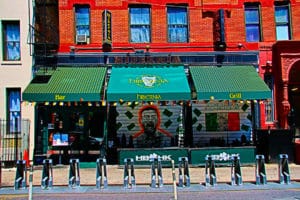
Hibernia Bar
401 W 50th St
New York, NY 10019, United States
Phone: +1 212-969-9703
FAQ About Irish Pub NYC
What is the best Irish pub in NYC?
The best choice depends on your location and preferred atmosphere. Hibernia Bar is a neighborhood Irish pub in Hell's Kitchen offering Guinness, Irish whiskey, pub food, and sports viewing.
Where do Irish people go in NYC?
New York's Irish community gathers in many neighborhoods and venues. Hibernia Bar welcomes Irish expats, local residents, and visitors at 401 W 50th St, just off Ninth Avenue.
Where can I watch GAA games in New York?
Hibernia Bar lists GAA among the sports it shows. Call +1 212-969-9703 to confirm coverage and opening times for a particular match before visiting.
What is the difference between a bar and a sports bar?
A sports bar emphasizes televised games and a shared viewing atmosphere. Hibernia combines sports viewing with the food, drinks, and hospitality of a neighborhood Irish pub.